
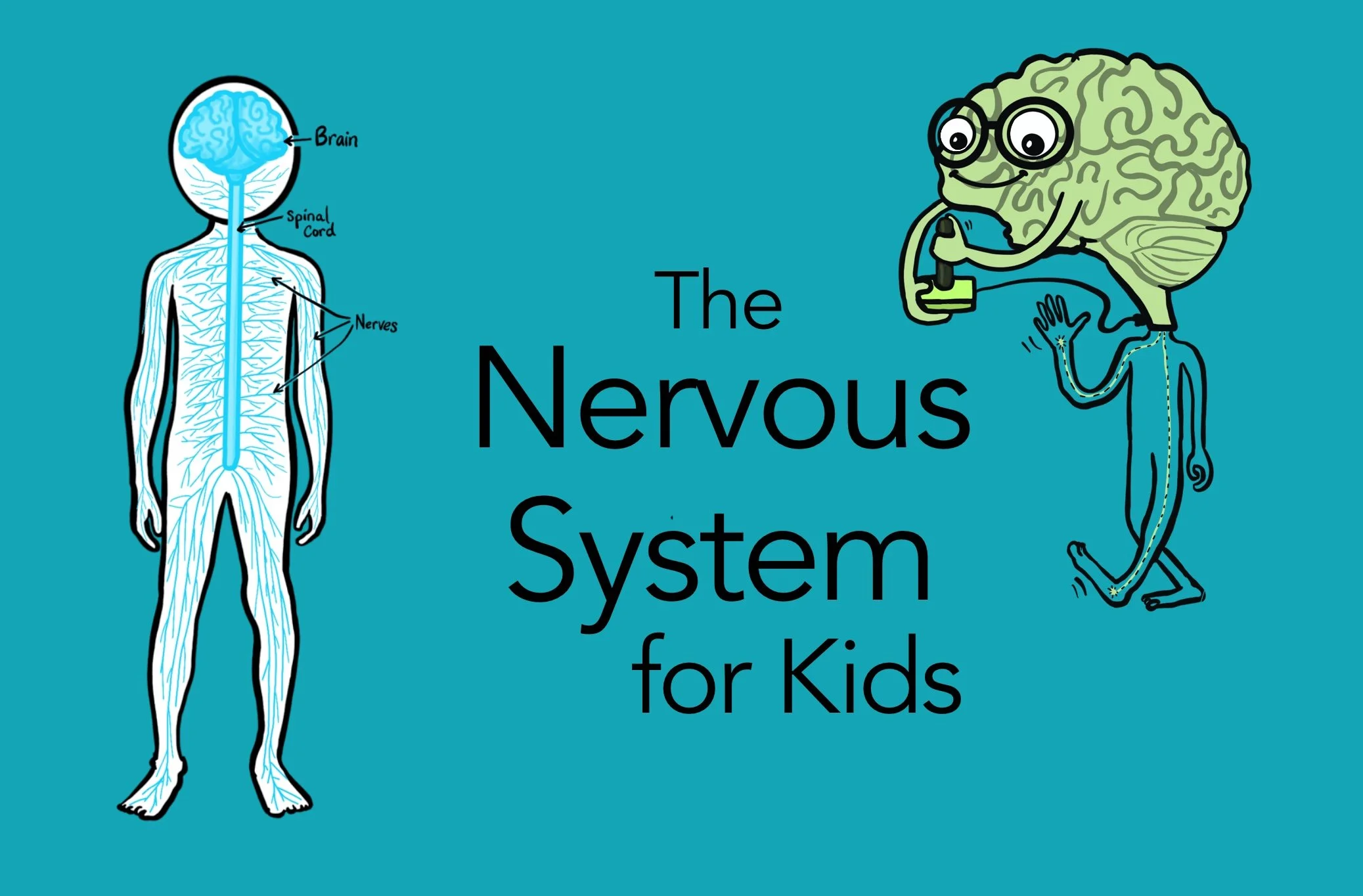
Your nervous system, or supercomputer control center, big commando, or whatever you want to call it, keeps your body running smoothly. Your nervous system contains the brain, spinal cord, and nerve cells, also called neurons.
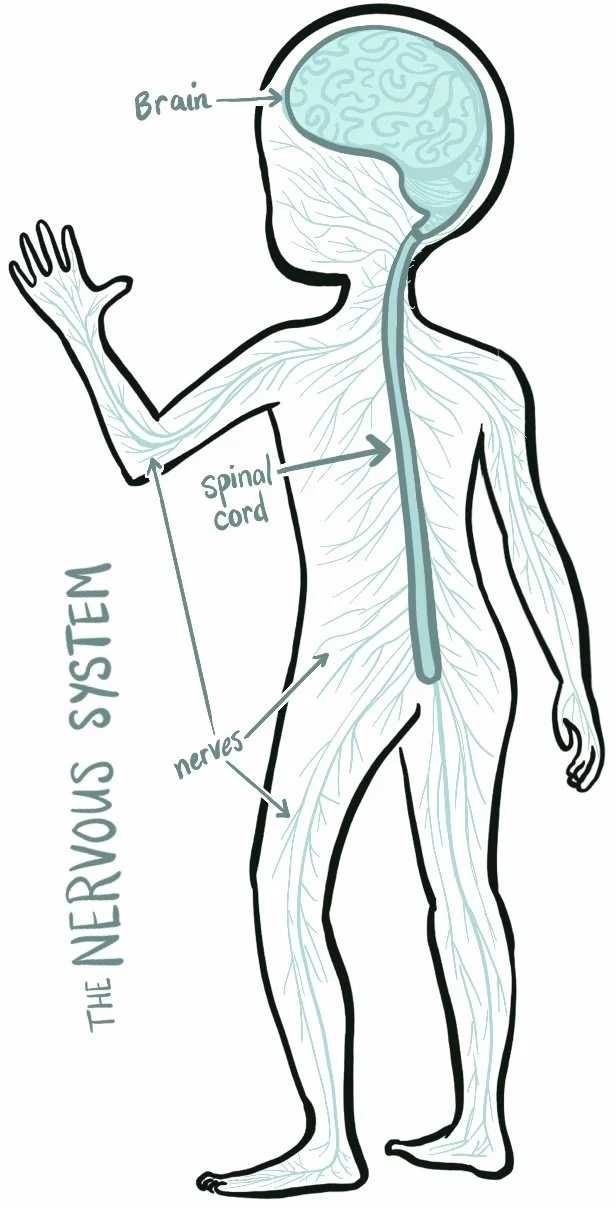
The nervous system consists of the central and peripheral nervous system. The central nervous system includes your brain and spinal cord, while the peripheral system includes the nerves outside these. The brain and spinal cord are in the center of your body, running from the top of your head to the bottom of your tailbone, which is one reason it is called central. Another reason it is called central is because it is connected to all the other nerves in the body; the nerves in your arms and toes, ears, chest, and more! The peripheral nerves sense all around you and within you; without them, you wouldn’t feel, see, hear, or sense anything.
The Nerve!
Our nervous system has a lot of nerve; or nerves, I mean! Approximately seven trilion nerves, to be exact! Most of the nerves in the body can be found in one organ —the brain. There are about 100 billion in the brain alone!
Nerve cells, also called Neurons, are used to communicate between organs. The brain communicates between organs all the time. In fact, if the brain cannot communicate with your heart or your lungs, you will die.
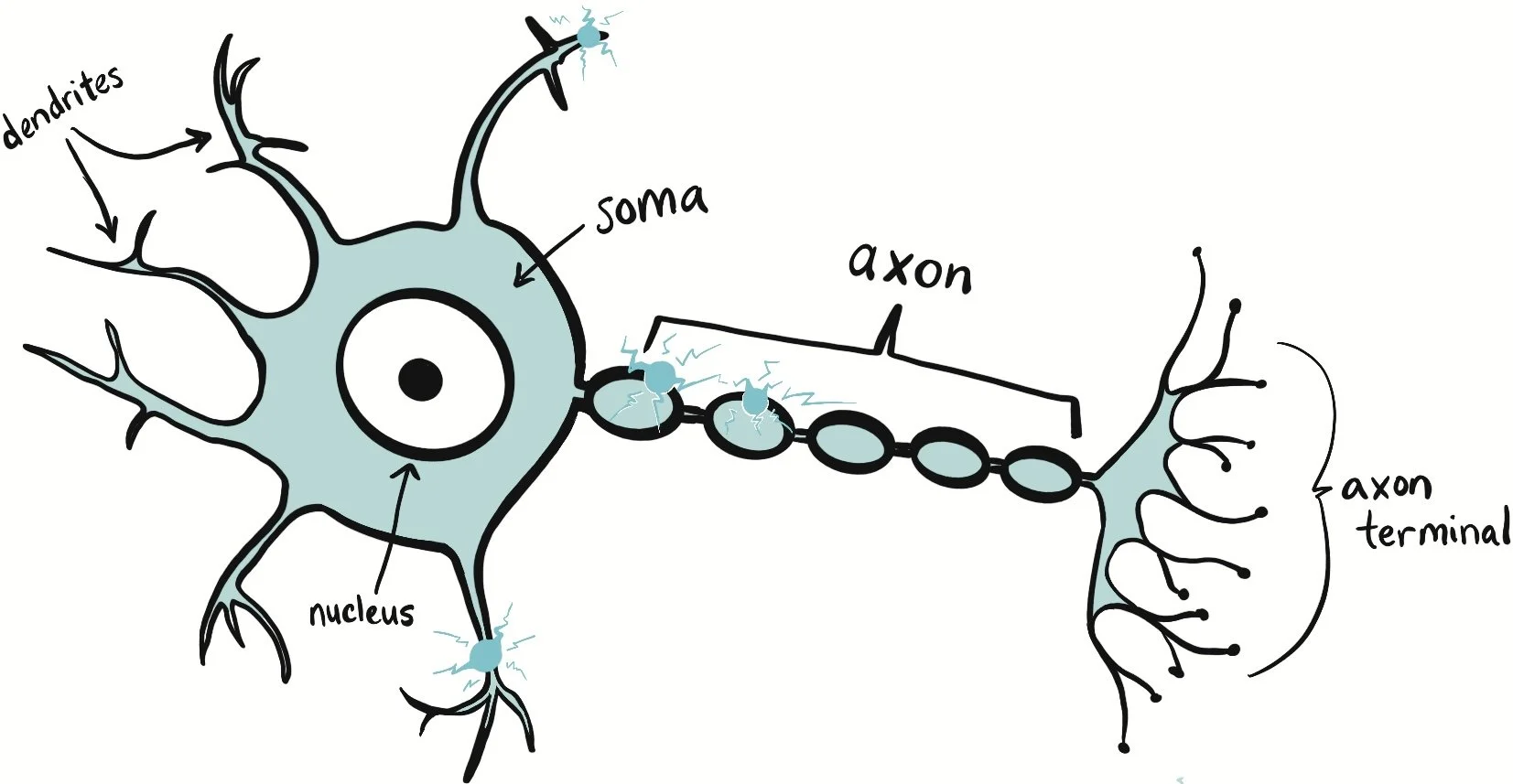
Neurons are made up of a cell body (called the soma), an axon, and dendrites. Neurons always send information from the dendrites to the cell body and out to the axon; the axon terminal then connects to other nerves.
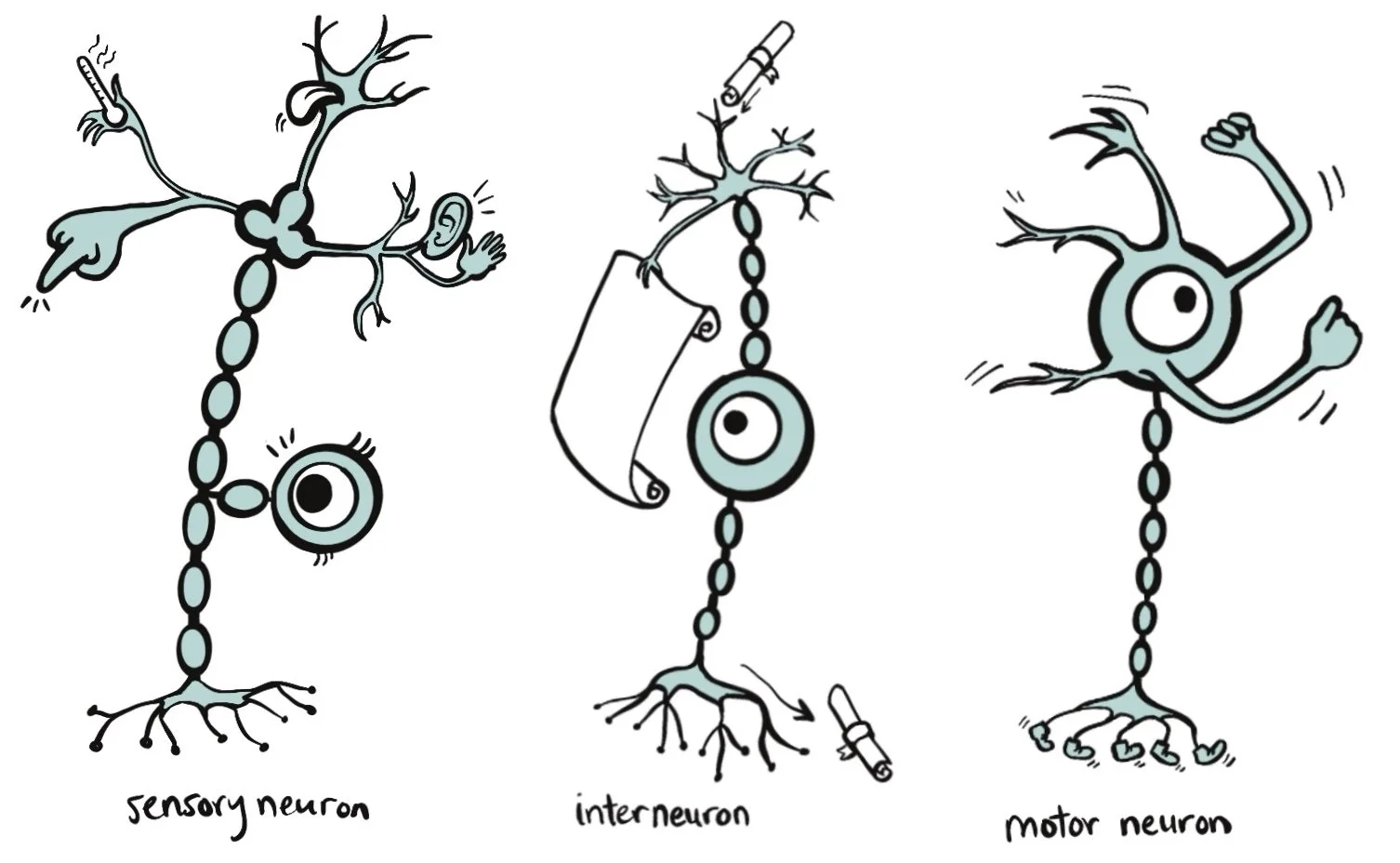
Sensory and motor neurons are found in the peripheral nervous system, whereas the interneurons are found in the brain and central nervous system.
The Spinal Cord
The spinal cord is a superhighway of nerves that connects our brain to the peripheral nerves. This roadway of communication between the brain and body is very important, so it has special protections. The spinal cord has a hard bone covering called the spine (also known as vertebrae), and it is cushioned by fluid called cerebrospinal fluid that functions like a shock absorber.
The Brain
The brain is the head honcho of the nervous system, processing 11 million bits of information every second! We are only conscious of about 10 to 50 bits per second, but the brain is very busy doing a lot for us all the time!
Our brain has different parts. Three major parts of the brain are called the cerebrum, cerebellum, and brain stem. The brain has two halves known as left and right hemispheres, four lobes, and a limbic system.
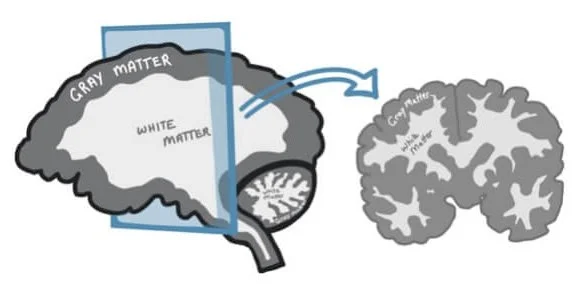
If your head were like a jar of pickles that you could open up and look inside, you would see that your brain is gray. If you mush your fingers into your brain like it was pumpkin guts, you will see that the inner part of your brain is white. The gray part, or gray matter, is mostly made of neuron cell bodies, and the inner white matter is made mostly of axons. The gray neuron cell body collects information while the axons communicate with other nerves. Your nervous system uses billions of neurons to send and receive electrical and chemical messages. The brain receives, processes, and interprets all these messages.
You can learn about your incredible nervous system in a PDF lesson which includes an illustrated lesson on the nerves and nervous system, a second lesson on the brain, plus memory posters and quizzes for each!
The cerebrum is the largest part of the brain. The cerebrum regulates your body temperature and controls movement. It is also used for sensing, speaking, problem-solving, reasoning, emotions, and more. The top layer of the cerebrum is called the cerebral cortex, and it has many folds and ridges. These folds and ridges create more surface area and, therefore, greater processing capability.
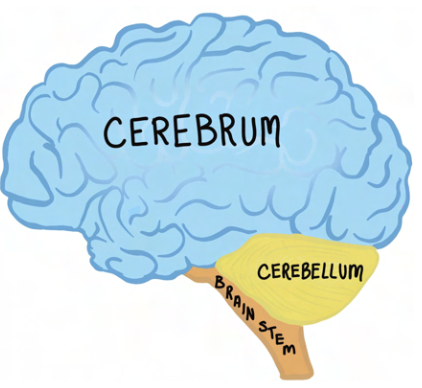
Just below the cerebrum sits the cerebellum. Your cerebellum is about the size of your fist. Posture and balance are controlled by the cerebellum, as are voluntary movements, like kicking your leg or flapping your arms like a chicken. This part of the brain also affects thinking, emotions, and social interaction.
The brainstem connects your brain to your spinal cord and the rest of your nervous system. It also controls automatic functions like heart rate, breathing, digestion, and blood pressure. Those are things you don’t want to be busy thinking about all the time. Isn’t it nice that the brain stem can keep all those things going without you having to remember? Thanks, Brainstem!
Check out the Nervous System for Kids PDF for more about the nervous system, with colorful illustrations and fun game-like quizzes!
Try this quick quiz to check your knowledge about the nervous system!